Grid Logic Puzzles
Thousands of free grid logic puzzles. Get solving…
Games
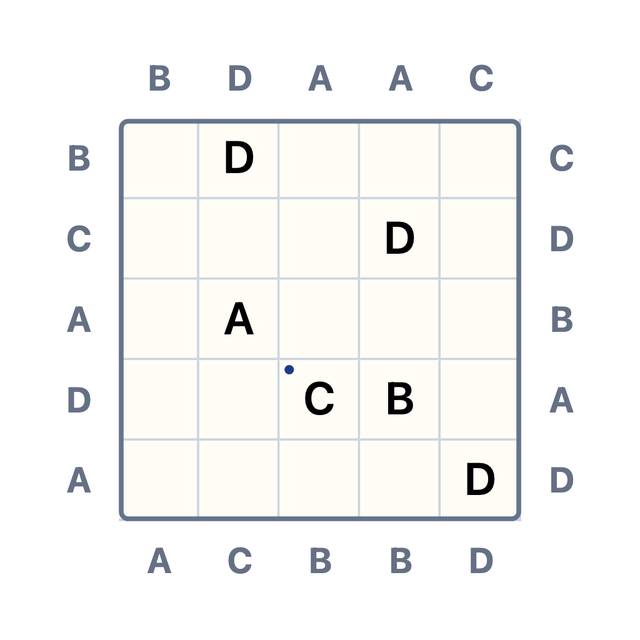
ABC
Fill each line so its edge clues reveal the first letters.
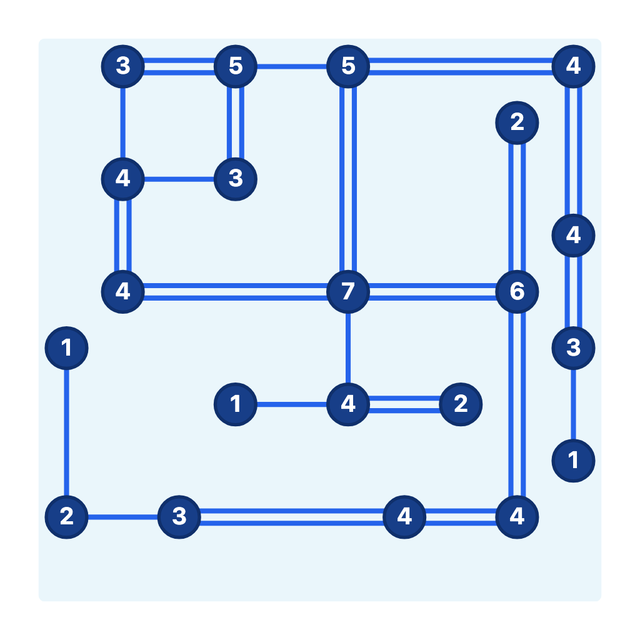
Bridges
Link every island with bridges to make one network.
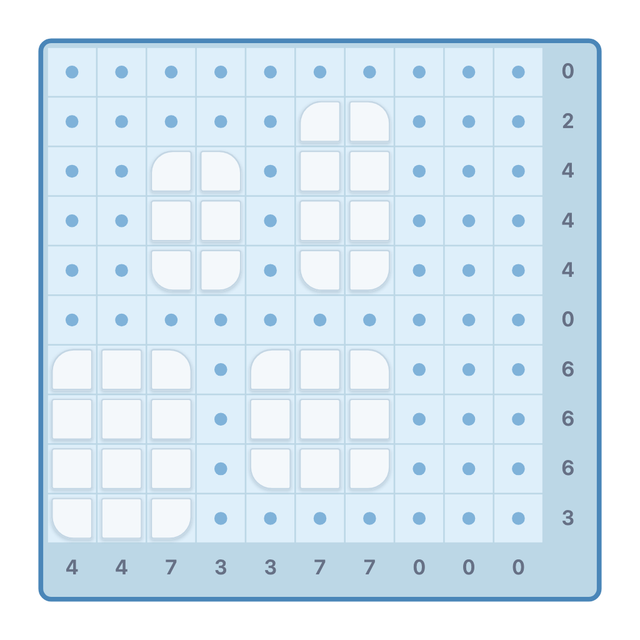
Clouds
Shade rectangular clouds to match the row and column clues.
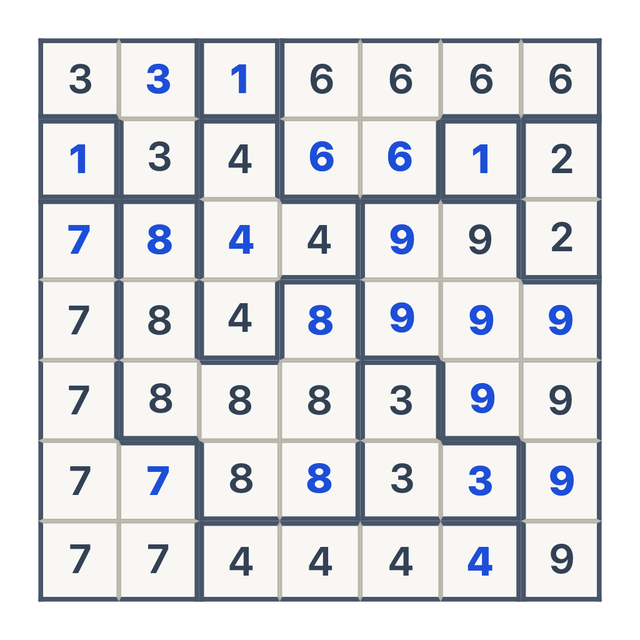
Fillomino
Make regions whose size matches the number inside.
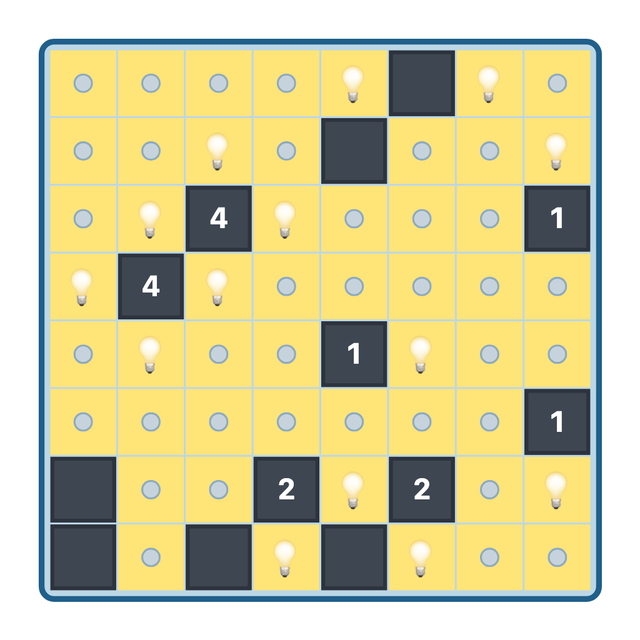
Lighten Up
Place bulbs to light every cell without lighting another bulb.
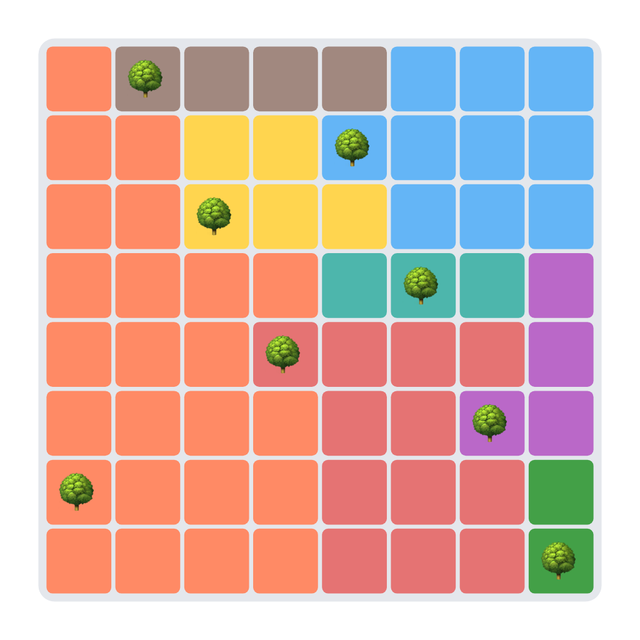
Parks
Place one tree in every row, column, and region.
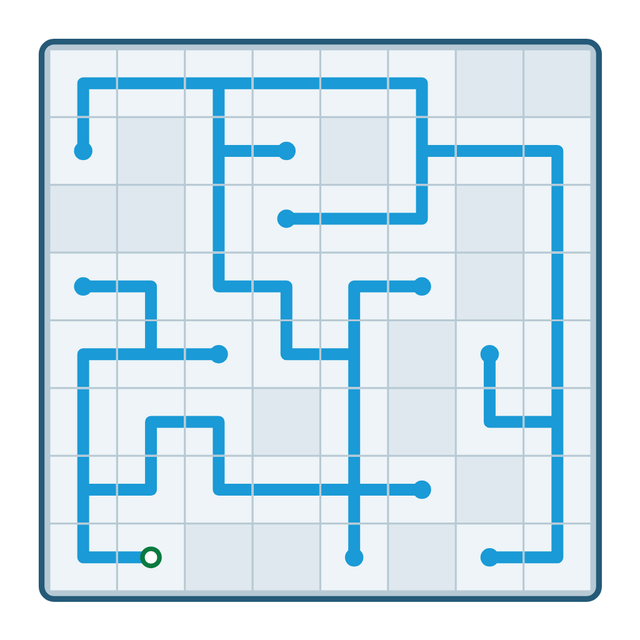
Pipes
Turn the pipes to make one connected, leak-free network.
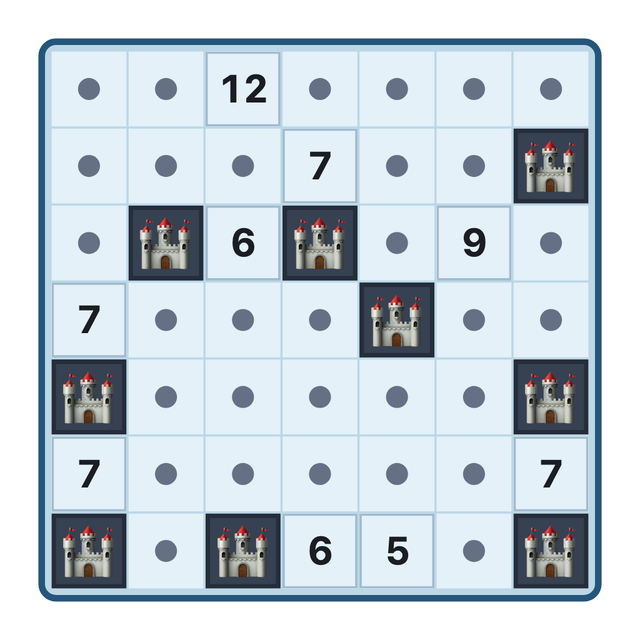
Sentinels
Place castles so each sentinel sees its required spaces.
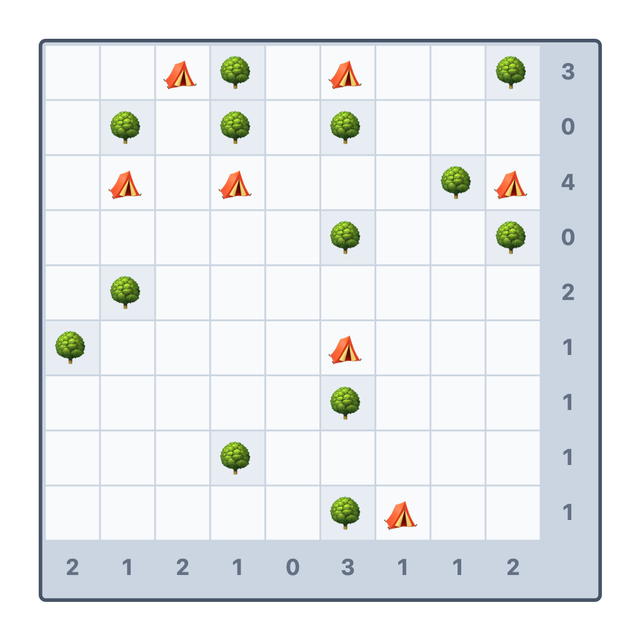
Tents
Pair each tree with a tent; tents cannot touch.
About Grid Puzzles
Grid Puzzles is a collection of 19 logic games in the pencil-and-paper tradition, rebuilt to play in a browser. There is nothing to install and nothing to pay: open a puzzle and start solving. Every game runs on a phone, a tablet, or a desktop, and they share the same core controls, so what you learn on your first game carries over to the rest.
These are puzzles of deduction. A few of them count and total, but none of them ask for real arithmetic — what they want is careful reasoning from the clues in front of you. The gentlest fall to a steady run of forced moves. The hardest will have you following a line of reasoning some way across the board before you can tell whether it holds.
Every puzzle has exactly one solution
Puzzles here are generated by computer and then checked by one. A candidate layout is only kept if a solver can prove it has a single solution — not one answer among several, but the only answer that fits. A puzzle that can be finished two different ways is discarded before anyone sees it. That is the guarantee that makes careful reasoning worthwhile: if your logic is sound, the answer you reach is the answer.
Difficulty is measured, not guessed
Every puzzle is rated by how hard it actually was to solve. The same solver that proves a puzzle unique also records how much searching it needed beyond straightforward deduction, and that score decides whether the puzzle is filed as Easy, Medium, Hard, or Insane. Nobody eyeballs a grid and calls it tricky. An Easy puzzle falls to steady reasoning; an Insane one will make you work for every cell.
Puzzles are also grouped by board size, so you can pick a quick small grid or settle into a large one. Size and difficulty are independent — a small board can be brutal, and a large one can be gentle.
What you will find
The games fall into a few families. If you already like one, its neighbours are usually a good next step.
- Place things on a grid
- Work out where a limited number of objects belong, using the counts along the edges and the rule that they may never crowd each other. Parks, Tents, Sentinels, Lighten Up.
- Shade the grid
- Decide which cells are filled and which stay empty, guided by the numbers along the edges and by the shapes the filled cells are allowed to make. Clouds, Aquarium.
- Fill every cell by the rules
- Each line has to end up balanced or complete — every symbol present the right number of times, with edge clues, column totals, or a ban on repetition pinning down the rest. Skyscrapers, Tenner Grid, ABC, Landscaper.
- Draw loops and networks
- Connect things up. The answer is a single path, loop, or network that satisfies every clue it passes without crossing or stranding itself. Masyu, Pipes, Bridges, Edaburi.
- Divide the board into regions
- Cut the grid into pieces, where each piece must hold the right clue and take a shape and size that clue allows. Galaxies, Fence It Up, Fillomino.
- Deduce what you cannot see
- The board hides its answer. Read the evidence around the edges and reason backwards to what must be inside. Battleships, Black Box.
How to play
Every game has its own guide covering the rules and the solving techniques that actually crack it — the openings worth looking for, and the patterns that turn a stuck board into a finished one, each with a worked example. You will find a How to Play link at the top of each game.
The board itself helps while you work. You can leave pencil marks when you suspect a cell without committing to it, undo and redo freely, and see a mark highlighted the moment it breaks one of the game's rules, so a mistake never sits undiscovered for twenty moves. In the games that count rows and columns, the tallies turn green as each line is satisfied.
Playing with or without an account
You do not need an account to solve puzzles — every game is open to anyone who visits, at every size and difficulty. Creating a free account adds the things that only make sense when the site remembers you: your completed puzzles are recorded, and you can mark the games you like as favorites so they come to the top of this page.
A subscription adds ad-free play and lets you save a puzzle in progress and return to it later. Solving itself is free either way, and no puzzle is ever locked behind a payment.